#DontCrossTheLine is a campaign targeting sexual harassment and misogynistic behaviours on nights out.
The campaign was launched in 2023 in bars, pubs and nightclubs as a tri-Borough initiative in response to reports from young people and nighttime economy users that there had been a rise in misogynistic behaviours since the Covid-19 pandemic.
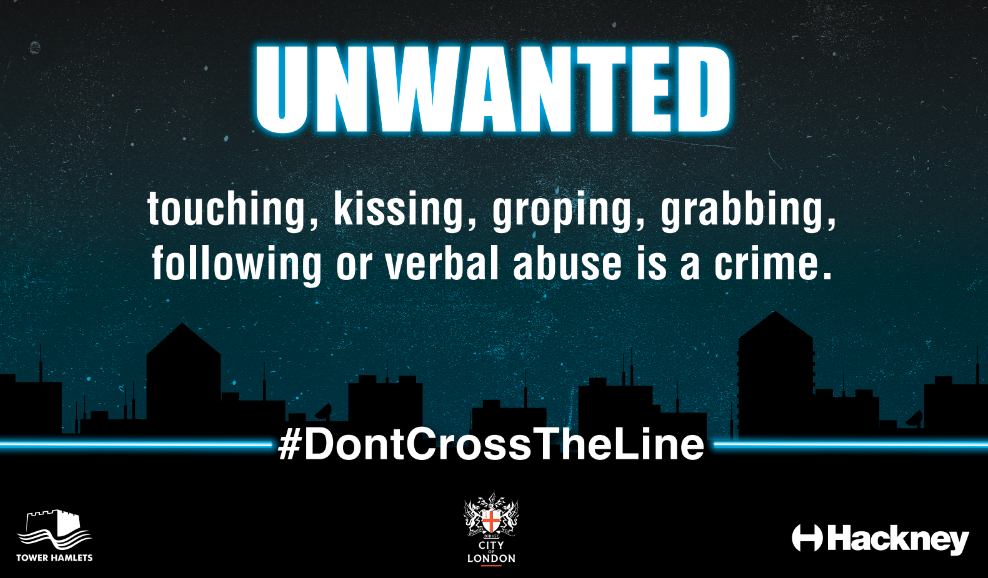
We aim to send a clear message to perpetrators of sexual offences that behaviours such as unwanted groping, grabbing and harassment are a crime and will not be tolerated, whilst also supporting victims and bystanders of these crimes to report these behaviours.
Please visit our venue resource page to join our campaign. Click here to visit our venue resource page.
If you are a victim of crime or have witnessed these behaviours, please visit our get support page, click here to visit.
Working together, we can make this a safer place for all.
Have your say
Views and experiences of local people are essential to the work we do to combat sexual harassment. Share your views on the campaign, an experience you had or what you think local authorities should be doing.
What is sexual harassment?
It’s unwanted behaviour (words or actions) of a sexual nature that could create an intimidating, hostile or degrading environment and make someone feel uncomfortable.
Harassment can be one-off or repeated, targeted at one person or the whole room.
It could look like:
following · staring · leering · inappropriate ‘jokes’ · shaming · creepy comments · flashing · not taking ‘no’ for an answer · comments or actions that target someone’s (actual or
perceived) sexuality · taking photos or buying drinks without consent · predatory behaviour targeting drunk or high people
What is sexual assault?
It’s the sexual touching of one person by another without a reasonable belief in their consent. It might look like groping, grabbing or rubbing up against someone, or touching any part of their body in a sexualised way.
All these behaviours are illegal or unlawful under the Sexual Offences Act 2003, Equality Act 2010 or Public Order Act 1986.
Who does this happen to?
It can happen to anyone, but statistics show that women are the most likely to experience sexual harassment, assault and abuse, along with LGBTQIA+ people. Perpetrators are overwhelmingly most likely to be men. This reality is linked to gender inequality in wider society, and is rooted in power and control, not sex or flirting. The only person responsible for sexual harassment or assault is the person choosing to harass others.
A 2017 YouGov survey showed 63% of women aged 18-24 had been subjected to inappropriate comments, unwanted touching and groping on nights out, as had 26% of men. By challenging
unacceptable behaviour, you are part of the solution.
Consent and the Law
Consent means we give permission or agree to do something. A person can consent when they are free to choose and have the freedom and the capacity to do so. If they’re feeling
threatened, pressured or scared, they’re not really free to choose to do something sexual. If someone is very drunk or drug affected, the law says they may not be capable of giving
consent. Remember: alcohol is the most common drug used in drink spiking.